
Site in beta
Modi-In
Verification

How to Verify Information Online and Spot Fake News: A Researcher’s Method

Six questions an intelligence researcher asks before trusting a report, image or document online: original source, date, location, cross-checking, interest, and fact versus assessment.

Modi Ben Shaul Updated 29 Oct 2026 2 min read

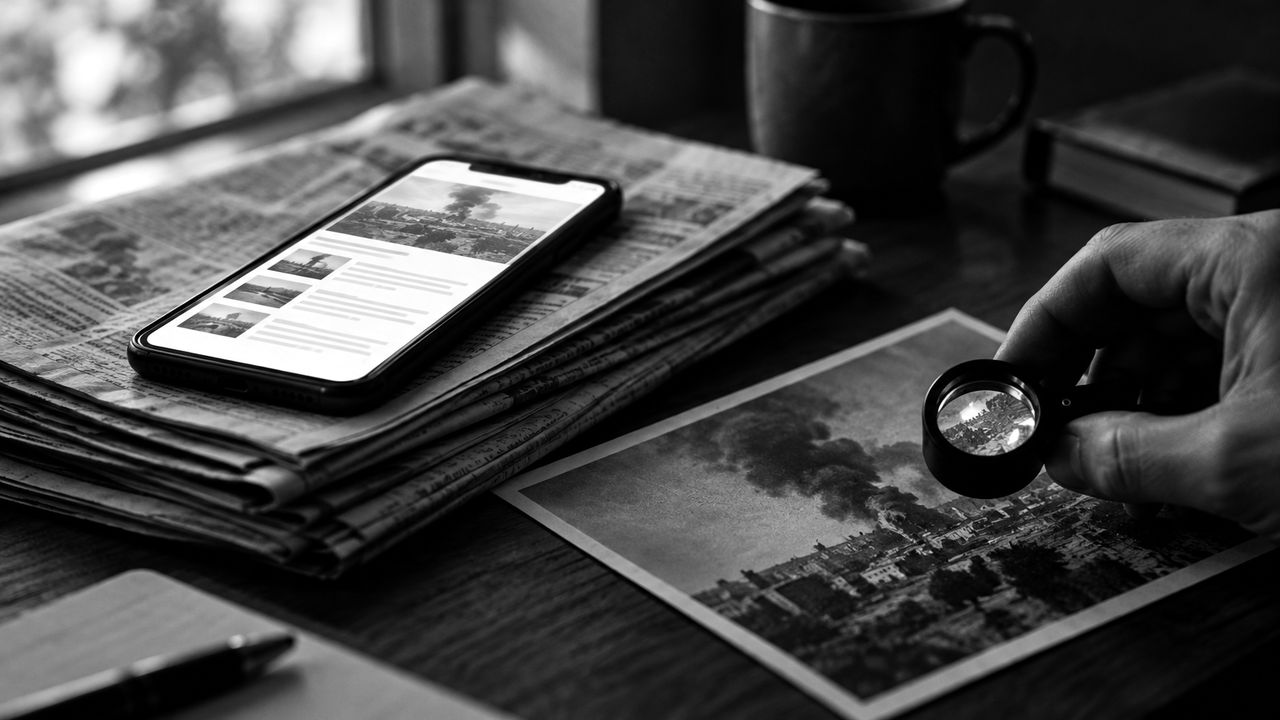
A sensational report, a screenshot of an “internal” document, a photo shared across groups. Before you make a business decision based on information like this, it is worth asking a few simple questions.

Who published it first?

Most reports online are copies of copies. The first step is to reach the original source: the original article, the official statement, the first post. Often it becomes clear right there that a quote was cut short or that the context is different.

When was it published?

An old story that starts circulating again is one of the most common sources of confusion. Check the original publication date and compare it with the events the story refers to.

Where was it taken?

For photos and videos you can run a reverse image search, for example with Google Lens or TinEye, to find the earliest publication. Geolocation, identifying the place from details in the image such as ridgelines, signs and buildings, helps check whether the image really comes from where it is claimed to have been taken.

Who else is reporting it?

One source is still a claim. Look for independent sources that don’t copy each other and that confirm the same detail. If everyone is quoting the same post, it is still one source.

Why now, and whom does it serve?

Every publication comes from some interest. Asking who benefits from spreading the story, and why right now, doesn’t disprove it, but it tells you to check it more carefully.

Fact or assessment?

Even a true story usually mixes facts with interpretation. Separate what happened from what someone thinks it means, and make your decision on the facts. More on facts vs. assessments.

Want me to look into this for you?

Leave your details and I’ll get back to you to define the research question.

Fully confidential. Nothing is stored on this site.
FAQ

Questions on this topic

Didn’t find your answer? Send me a question on WhatsApp and I’ll get back to you.

All FAQs
Why does verification matter for businesses?

Because decisions about an investment, a partner or a crisis response rest on information. A false report accepted as fact can be very costly.

Can a document be verified too?

Sometimes. You check its source, whether it matches official publications, and its internal consistency. Certainty isn’t always possible, and then the answer has to say so explicitly.

What if it can’t be verified?

Say so. A good intelligence picture marks explicitly what is known, what is estimated and what is unknown.

Glossary

Business intelligence glossary

Core concepts, in brief

Verification

Fact-checking

Checking whether a report, image or document can be trusted: what the original source is, when it was published, and who else is reporting it. That is how you tell real news from fake news.

How to verify information

Geolocation

Imagery

Identifying where a photo or event took place from details in the image and on the map: ridgelines, signs, buildings and shadows. Used for geographic research and verification.

Geographic research

Facts vs. assessments

Analytic thinking

A ground rule of intelligence analysis: separate what is known from what is estimated, and go back to the original raw data when an old assessment starts behaving like a fact.

Nine tools from intelligence

Open-source intelligence

OSINT · Core concept

Collecting and analyzing information that has been published openly and legally: media, social networks, websites and official publications. The value is never in a single piece of information, but in cross-checking many of them.

What is OSINT

Online threat monitoring

Protection

Tracking threats and statements on social networks against executives, high-net-worth individuals and companies, and mapping who is behind them.

Monitoring and alerts
Your turn

Have a question that needs an answer?

Send it on WhatsApp, by phone or by email, and I’ll get back to you to define the research question together.